

North Carolina
North Carolina Division of Motor Vehicles
North Carolina permit practice test
Free practice for the NCDMV knowledge test — no account, no paywall. Every answer explains why and links to the rule it comes from, and 9 questions are checked against North Carolina's own handbook.
- Earliest permit
- 15
- Test
- —
- Pass mark
- —
— = not confirmed. Sources in the facts section below.
Practice for the North Carolina knowledge test
97 questions available · free · no account · progress stays on this device
Loading your saved progress…
North Carolina licensing facts we could verify
Each fact names its source and how we read it. Where an agency doesn't publish a detail, or blocked our checker, we say so instead of guessing.
- Licensing agency
- North Carolina Division of Motor Vehicles
- Earliest learner permit
- 15 (Level 1 Limited Learner Permit, ages 15–17)Seen in the official site's search listing — the page blocked our checker, so confirm it there · Get a Level 1 Limited Learner Permit · checked October 12, 2026
- Knowledge test format
- Not confirmedWritten, sign and vision tests are required; length and pass mark not confirmed.
- Official test online?
- Not confirmedNot stated on the official pages we could read.
Official handbook
North Carolina Driver Handbook ↗We read this edition page by page on October 12, 2026 to check the North Carolina-specific questions here. It is the source of truth — study it.
Official handbook; linked, not reproduced.
Ready for the real thing?
Appointments, documents and fees are set by the North Carolina Division of Motor Vehicles. Always book through the official site.
Go to the NCDMV site ↗Specific to North Carolina
Rules that differ from state to state
These come straight from the North Carolina Driver Handbook, page referenced — and several are numbers other states set differently.
At an intersection with no signs or signals, when two vehicles arrive at about the same time, the driver on the left yields to the driver on the right.
Handbook p. 59
When an emergency vehicle approaches using its siren and/or flashing lights, drive to the right edge of the road and stop until it has passed (never stopping inside an intersection).
Handbook p. 50
Do not park within 15 feet of a fire hydrant.
Handbook p. 58
The handbook teaches a 2-second following distance.
Handbook p. 56
Drivers 21 and over: the per se alcohol limit is 0.08% BAC.
Handbook p. 33
Teens log at least 60 hours of supervised driving before a provisional license.
Handbook p. 14
Hold the learner permit at least 9 months before the next license stage.
Handbook p. 14
Signal at least 100 feet before turning.
North Carolina: 200 feet where the speed limit is 45 mph or more.
Handbook p. 71
When stopping for a train, stop no closer than 15 feet to the nearest rail.
Handbook p. 62
RoadSense Studio
See the situation, then decide
Step through real intersections. Only scenes whose rule we verified for North Carolina (or that rest on the national standard) appear here.
North Carolina · verified scene
Left turn on a solid green
A green light permits your left turn — it does not protect it.
Green light. Your light is solid green. You want to turn left. A red car approaches from the opposite direction, going straight.
Rule: On a circular green you may go straight or turn, but turning traffic yields to pedestrians in the crosswalk and to vehicles in the intersection, and a left turn also yields to oncoming traffic close enough to be a hazard.
- Manual on Uniform Traffic Control Devices for Streets and Highways, 11th Edition with Revision 1 — Section 4A.03 A.1
Read the whole scene as text
- Green light: Your light is solid green. You want to turn left. A red car approaches from the opposite direction, going straight.
- Decision point: You have pulled forward to the stop line. The oncoming car is close and still coming.
- Oncoming car passes: You wait. The oncoming car passes straight through.
- You turn: With the way clear, you complete your left turn.
Sample questions
Answers and sources are in the page, so they work without JavaScript.
Sample 1 · North Carolina rule
North Carolina: at an intersection with no signs or signals, you and a car approaching from your right arrive at about the same time. What do you do?
- Go first; you are on the main road
- Yield to the car on your right
- Speed up to clear the intersection
- The car on the right must yield to you
Show answer
Yield to the car on your right. At an uncontrolled intersection, when two vehicles arrive at about the same time, the driver on the left yields to the driver on the right.
Source: North Carolina Driver Handbook, p. 59
Sample 2 · North Carolina rule
North Carolina: an ambulance with its siren on and lights flashing is coming up behind you. What must you do?
- Keep going at the same speed so it can predict you
- Drive to the right edge of the road and stop until it has passed — but not inside an intersection
- Stop immediately where you are, even in the intersection
- Speed up to stay ahead of it
Show answer
Drive to the right edge of the road and stop until it has passed — but not inside an intersection. Yield by pulling as far right as you safely can and stopping until the emergency vehicle has passed. Clear the intersection first rather than stopping inside it.
Source: North Carolina Driver Handbook, p. 50
Sample 3 · National standard
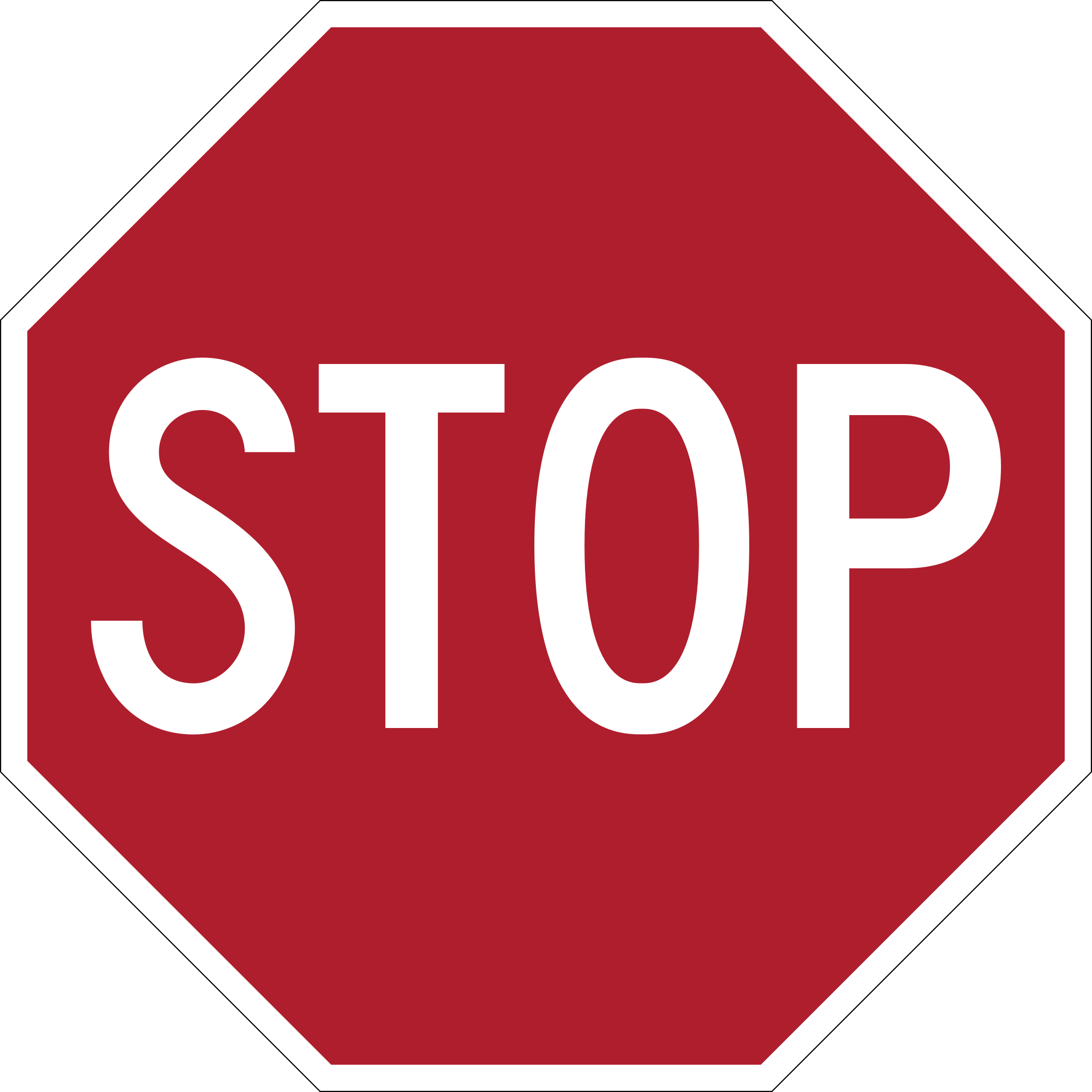
What does this sign require you to do? (Red octagon STOP sign)
- Slow down and continue if no one is coming
- Come to a full stop, then go only when it is safe
- Stop only if other vehicles are at the intersection
- Stop only when turning
Show answer
Come to a full stop, then go only when it is safe. An octagon is used for STOP and nothing else. It is placed where a full stop is always required, so you stop completely every time, then proceed only when you can do so safely.
Source: Manual on Uniform Traffic Control Devices for Streets and Highways, 11th Edition with Revision 1, Section 2B.04; Table 2A-1
Where this page stands
- State facts not yet reviewed by a human editor
- Official test format not confirmed first-hand
Common questions
North Carolina permit test, answered
How many questions are on the North Carolina permit test, and what do I need to pass?
Not confirmed — Written, sign and vision tests are required; length and pass mark not confirmed. Ask the NCDMV or check its handbook before your test; we won't guess a number.
How old do you have to be to get a learner permit in North Carolina?
15 (Level 1 Limited Learner Permit, ages 15–17). Source: Get a Level 1 Limited Learner Permit (confirm on the agency site).
Can I take the official North Carolina knowledge test online?
Not confirmed — Not stated on the official pages we could read. Our practice is online, but it is not the official test.
Is this the official NCDMV test?
No. FuelWide is independent. Our 97 practice questions are written by us, 9 of them from rules we checked in the North Carolina handbook, and the official test is given only by the North Carolina Division of Motor Vehicles.
What does the North Carolina test cover?
Every state tests road signs, signals and pavement markings (a national standard), right-of-way, and safe-driving practice, plus its own laws — parking distances, alcohol limits, school-bus and emergency-vehicle rules. The North Carolina Driver Handbook is the source of truth.
More for new North Carolina drivers
- Road sign trainer — every standard U.S. sign shape and color
- North Carolina gas prices — what filling up costs today
- Fuel cost calculator — budget your first car's running costs
FuelWide Driving Academy is independent. It is not affiliated with, endorsed by or run by any state motor vehicle agency or government body, and its practice sets are not the official knowledge test. Book and take the real test only through the North Carolina Division of Motor Vehicles.